St. Clare's Catholic Primary School Logo

St. Clare's Catholic Primary School

Walk in the Light

  • [email protected]
  • 01642 815412
  • Our School
    • About Us
      • Welcome from the Headteacher
      • Mission, Ethos & Values
      • Our Trust
      • Vacancies
    • Catholic Life
      • Awards
      • Catholic Life
      • Chaplaincy
      • Collective Worship
      • Our Parish Community
      • Our Patron Saints
      • Our School Prayers
      • Rainbows
    • Governance
      • Link Governance Framework & Toolkit
      • Interested in Being a Governor
      • Governor Handbook
      • Governing Body Membership
      • Governing Body Meeting Attendance & Interests
      • Memorandum of Understanding
      • Code of Conduct for Governors
  • Parents & Pupils
    • Key Information
      • Admissions
      • Adverse Weather
      • Apply for Free School Meals
      • Attendance
      • Breakfast & Afterschool Club
      • Holiday Request Form
      • House Points
      • Mental Health & Wellbeing
      • Ofsted, Exams & Diocesan Reports
      • Ofsted Parents View
      • PE & Sports Premium
      • Policies
      • Prevent Duty
      • Pupil Premium
      • Safeguarding & Child Protection
      • Special Educational Needs & Disability Provision
      • School Meals
      • School Uniform
      • Timing of the School Day
    • Curriculum
      • British Values
      • Curriculum Overview
      • Early Years
      • Learning Zone
      • OPAL – Outdoor Play and Learning
      • Religious Education
      • NPCAT Sport
      • Year 6 Transition (Step 7)
    • News & Events
      • Newsletters & Publications
      • School Calendar
      • Term Dates
      • Trust Events Calendar
      • Diocesan News
  • Statutory
St. Clare's Catholic Primary School Logo
  • Our School
    • About Us
      • Welcome from the Headteacher
      • Mission, Ethos & Values
      • Our Trust
      • Vacancies
    • Catholic Life
      • Awards
      • Catholic Life
      • Chaplaincy
      • Collective Worship
      • Our Parish Community
      • Our Patron Saints
      • Our School Prayers
      • Rainbows
    • Governance
      • Link Governance Framework & Toolkit
      • Interested in Being a Governor
      • Governor Handbook
      • Governing Body Membership
      • Governing Body Meeting Attendance & Interests
      • Memorandum of Understanding
      • Code of Conduct for Governors
  • Parents & Pupils
    • Key Information
      • Admissions
      • Adverse Weather
      • Apply for Free School Meals
      • Attendance
      • Breakfast & Afterschool Club
      • Holiday Request Form
      • House Points
      • Mental Health & Wellbeing
      • Ofsted, Exams & Diocesan Reports
      • Ofsted Parents View
      • PE & Sports Premium
      • Policies
      • Prevent Duty
      • Pupil Premium
      • Safeguarding & Child Protection
      • Special Educational Needs & Disability Provision
      • School Meals
      • School Uniform
      • Timing of the School Day
    • Curriculum
      • British Values
      • Curriculum Overview
      • Early Years
      • Learning Zone
      • OPAL – Outdoor Play and Learning
      • Religious Education
      • NPCAT Sport
      • Year 6 Transition (Step 7)
    • News & Events
      • Newsletters & Publications
      • School Calendar
      • Term Dates
      • Trust Events Calendar
      • Diocesan News
  • Statutory
St. Clare's Catholic Primary School Logo
  • Our School
    • About Us
      • Welcome from the Headteacher
      • Mission, Ethos & Values
      • Our Trust
      • Vacancies
    • Catholic Life
      • Awards
      • Catholic Life
      • Chaplaincy
      • Collective Worship
      • Our Parish Community
      • Our Patron Saints
      • Our School Prayers
      • Rainbows
    • Governance
      • Link Governance Framework & Toolkit
      • Interested in Being a Governor
      • Governor Handbook
      • Governing Body Membership
      • Governing Body Meeting Attendance & Interests
      • Memorandum of Understanding
      • Code of Conduct for Governors
  • Parents & Pupils
    • Key Information
      • Admissions
      • Adverse Weather
      • Apply for Free School Meals
      • Attendance
      • Breakfast & Afterschool Club
      • Holiday Request Form
      • House Points
      • Mental Health & Wellbeing
      • Ofsted, Exams & Diocesan Reports
      • Ofsted Parents View
      • PE & Sports Premium
      • Policies
      • Prevent Duty
      • Pupil Premium
      • Safeguarding & Child Protection
      • Special Educational Needs & Disability Provision
      • School Meals
      • School Uniform
      • Timing of the School Day
    • Curriculum
      • British Values
      • Curriculum Overview
      • Early Years
      • Learning Zone
      • OPAL – Outdoor Play and Learning
      • Religious Education
      • NPCAT Sport
      • Year 6 Transition (Step 7)
    • News & Events
      • Newsletters & Publications
      • School Calendar
      • Term Dates
      • Trust Events Calendar
      • Diocesan News
  • Statutory
  • [email protected]
  • 01642 815412

History

Curriculum Overview
  • Art & Design
  • Computing
  • Design & Technology
  • English
    • Reading
    • Phonics
    • Writing
    • Spelling, Punctuation & Grammar
    • Handwriting
    • Oracy
    • Love of Reading
  • Geography
  • History
  • Mathematics
  • MFL
  • Music
  • Physical Education
  • PSHE and Character Development
  • Religious Education
  • RSE
  • Science

At St Clare’s, we believe a high-quality History education will help pupils gain a coherent knowledge and understanding of Britain’s past and that of the wider world. It should inspire pupils’ curiosity to know more about the past. Teaching should equip pupils to ask perceptive questions, think critically, weigh evidence, sift arguments, and develop perspective and judgement. History helps pupils to understand the complexity of people’s lives, the process of change, the diversity of societies and relationships between different groups, as well as their own identity and the challenges of their time.

Intent:

The national curriculum for history aims to ensure that all pupils:

  • know and understand the history of Britain as a coherent, chronological narrative, from the earliest times to the present day: how people’s lives have shaped this nation and how Britain has influenced and been influenced by the wider world
  • know and understand significant aspects of the history of the wider world: the nature of ancient civilisations; the expansion and dissolution of empires; characteristic features of past non-European societies; achievements and follies of mankind
  • gain and deploy a historically grounded understanding of abstract terms such as ‘empire’, ‘civilisation’, ‘parliament’ and ‘peasantry’
  • understand historical concepts such as continuity and change, cause and consequence, similarity, difference and significance, and use them to make connections, draw contrasts, analyse trends, frame historically-valid questions and create their own structured accounts, including written narratives and analyses
  • understand the methods of historical enquiry, including how evidence is used rigorously to make historical claims, and discern how and why contrasting arguments and interpretations of the past have been constructed
  • gain historical perspective by placing their growing knowledge into different contexts, understanding the connections between local, regional, national and international history; between cultural, economic, military, political, religious and social history; and between short- and long-term timescales.

Implementation:

Our history curriculum draws upon several powerful sources of knowledge and sits alongside our teaching and learning procedures.

Substantive knowledge– this is the subject knowledge and explicit vocabulary used about the past. Common misconceptions are explicitly revealed as non-examples and positioned against known and accurate content. Misconceptions are challenged carefully and in the context of the substantive and disciplinary knowledge.

Disciplinary knowledge– this is the use of that knowledge and how children construct understanding through historical claims, arguments and accounts. We call it ‘Working Historically.’ The features of thinking historically may involve significance,  evidence, continuity and change, cause and consequence, historical perspective, and contextual interpretation.

Historical analysis is developed through selecting, organising and integrating knowledge through reasoning and inference making in response to our structured questions and challenges. We call this ‘Thinking historically’

Substantive concepts, such as tax, invasion and civilisation are taught through explicit vocabulary instruction as well as through the direct content and context of the study.

Our history curriculum draws upon prior learning, wherever the content is taught. For example, in the EYFS, pupils may learn about the past and present through daily activities, exploring through change, and understanding more about the lives of others through books and visitors as well as their own experiences. These experiences are drawn upon and used to position new learning in KS1.

The structure is built around the principles of advancing cumulative knowledge, chronology, change through cause and effect, as well as making connections within and throughout periods of time studied.

The history curriculum is planned so that the retention of knowledge is much more than just ‘in the moment knowledge’. The cumulative nature of the curriculum is made memorable by the implementation of Bjork’s desirable difficulties, including retrieval and spaced retrieval practice, word building and deliberate practice tasks. This powerful interrelationship between structure and research-led practice is designed to increase substantive knowledge and accelerate learning within and between study modules. That means the foundational knowledge of the curriculum is positioned to ease the load on the working memory: new content is connected to prior learning. The effect of this cumulative model supports opportunities for children to associate and connect with significant periods of time, people, places and events.

The history curriculum strategically incorporates a range of modules that revisit, elaborate and sophisticate key concepts, events, people and places.

A guiding principle of the history curriculum is that pupils become ‘more expert’ with each study and grow an ever broadening and coherent mental timeline. This guards against superficial, disconnected and fragmented understanding of the past. Specific and associated historical vocabulary is planned sequentially and cumulatively from Y1 to Y6. High frequency, multiple meaning words (Tier 2) are taught alongside and help make sense of subject specific words (Tier 3). Each learning module in history has a vocabulary module with teacher guidance, tasks and resources.

Impact:

Children who have a genuine love of the past particularly in their local area.

Children who can appreciate the great achievements and developments of the past and how this has affected the future.

  • pdf
    History LTP 1.pdf pdf349.1 KbFeb 4th, 2026

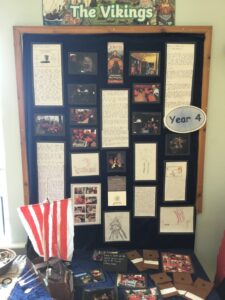
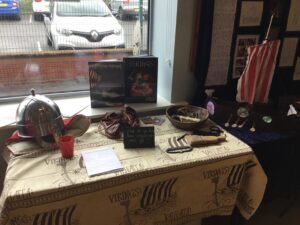
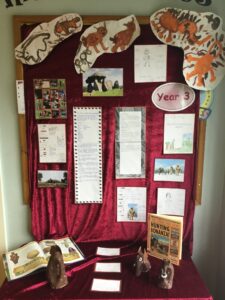
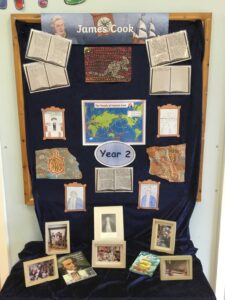
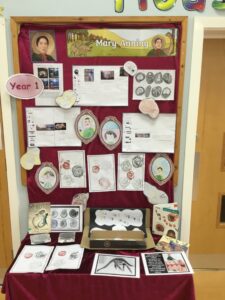
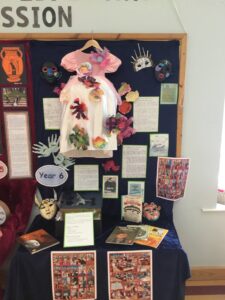
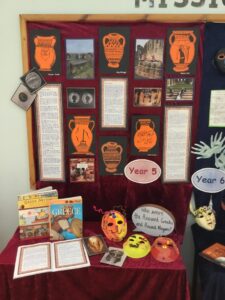
Our most recent history celebration. Museum in a classroom with parents invited into all of the classrooms and museums set up in the hall. (April 2024)


Homework help:

Click below to view useful links and websites to support teaching and learning of History in schools:

Hundred objects from museums across the UK with resources, information and teaching ideas to inspire your children’s’ interest in history: http://teachinghistory100.org/

Enter ancient worlds, meet famous people and discover fascinating facts by exploring a wide selection of historical games and activities: http://www.bbc.co.uk/history/forkids/

Fun, history educational websites for primary aged children (7 to 11): http://www.teachingandlearningresources.co.uk/funhistory.shtml

dlearningresources.co.uk/funhistory.shtml


Curriculum Overview

  • Art & Design
  • Computing
  • Design & Technology
  • English
  • Geography
  • History
  • Mathematics
  • MFL
  • Music
  • Physical Education
  • PSHE and Character Development
  • Religious Education
  • RSE
  • Science

Social Media

Comments Box SVG iconsUsed for the like, share, comment, and reaction icons
Author Avatar
St. Clare's Catholic Primary School
3 weeks ago

Year 6 enjoying their last day ... See MoreSee Less

Year 6 enjoying thei
View on Facebook
· Share
Share on Facebook Share on Twitter Share on Linked In Share by Email
View Comments likes love 32 Shares: 0 Comments: 2

2 CommentsComment on Facebook

Author Avatar
St. Clare's Catholic Primary School
3 weeks ago

Some more Y2 pictures from Rock star day! ... See MoreSee Less

Some more Y2 pictureImage attachmentImage attachment+2Image attachment
View on Facebook
· Share
Share on Facebook Share on Twitter Share on Linked In Share by Email
View Comments likes love 12 Shares: 0 Comments: 1

1 CommentsComment on Facebook

Author Avatar
St. Clare's Catholic Primary School
3 weeks ago

Thank you to all the year 6 children’s families for joining us on the field for a picnic ... See MoreSee Less

Thank you to all the
View on Facebook
· Share
Share on Facebook Share on Twitter Share on Linked In Share by Email
View Comments likes love 21 Shares: 0 Comments: 0

0 CommentsComment on Facebook

Load more
Find us
St. Clare's Catholic Primary School,
Trimdon Avenue, Middlesbrough, TS5 8RZ
  • 01642 815412
  • [email protected]
  • Chair of Governors: Mrs V Putson

  • Executive Headteacher: Mrs E Eddies

  • School Office and Enquiries: Mrs K Longstaff

  • SENDCO: Mrs J Voyzey

Trust Links

  • Trust Website
  • Trust Wide Policies
  • Trust Vision
  • Welcome from the CEO
  • Our Schools Websites
  • Our Schools Locations
Trust Logo
Diocese Logo

Trustees, Members, and Governors can be contacted via email: [email protected]

Freedom of Information Requests: [email protected]
Data Protection Requests: [email protected]


A paper copy of the information on this website can be provided on request.


Nicholas Postgate Catholic Academy Trust is an exempt charity regulated by the Secretary of State for Education. It is a company limited by guarantee, registered in England and Wales (company number 09203984) whose registered office is at Nicholas Postgate Catholic Academy Trust, Postgate House, Saltersgill Avenue, Middlesbrough. TS4 3JP

School website powered by Realsmart Logo